
UKMLA revision.
See the connections.
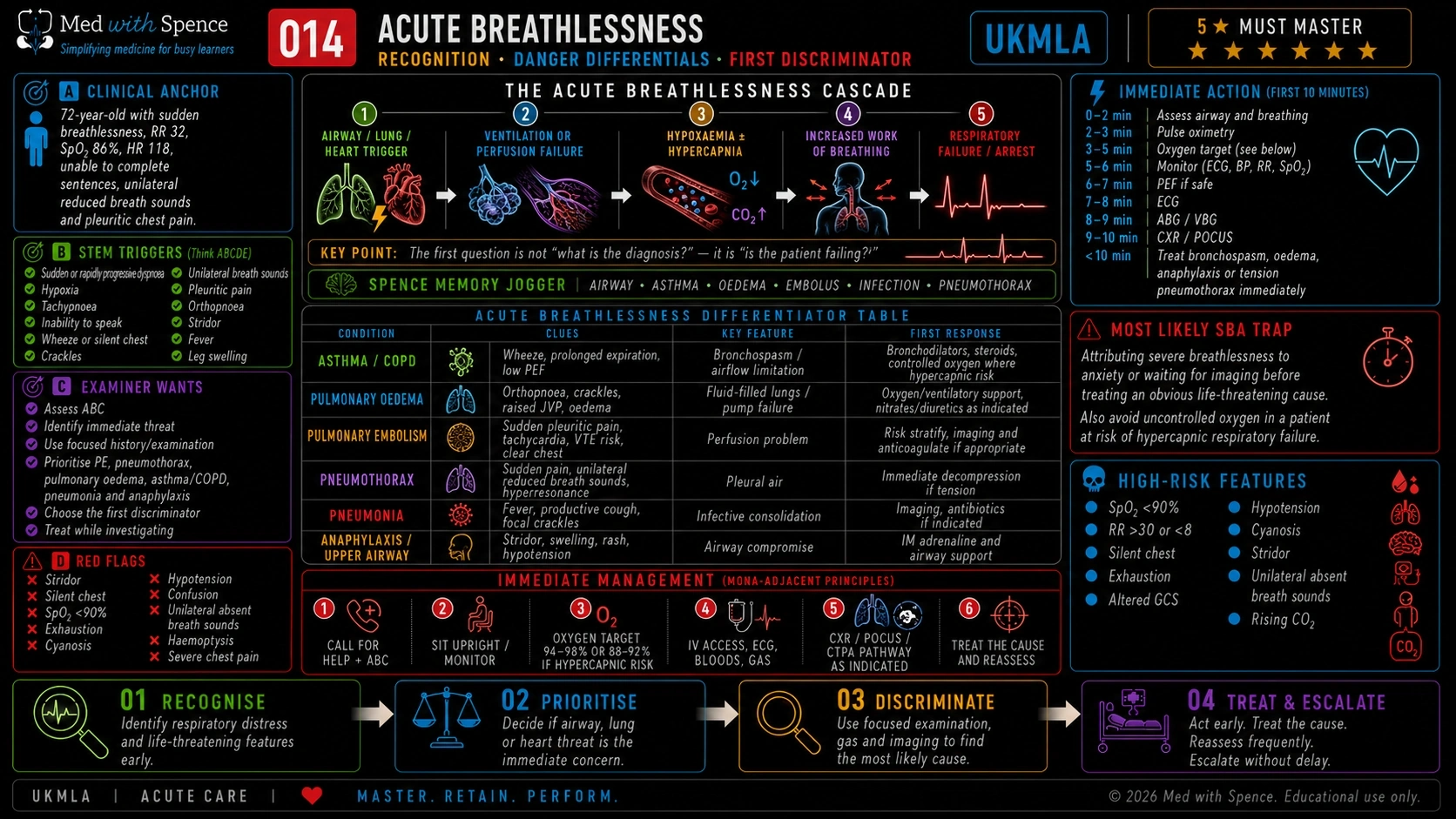
A visual learning library for medical students preparing for UKMLA. Study 197 original visuals, explain a key connection from memory and use two questions to check key ideas.
197 original UKMLA visuals
- Recall with the visual hidden
- A summary for every visual
- Saved progress & review
One complete UKMLA lesson. No account, email or card.
Required clinical updates appear in the lesson.
One routine.
Four clear steps.
Study at your own pace, then choose Done to begin recall. Finish with questions and a summary.
- 01
Study
Explore the original visual. Zoom, read and make the connections. Select Done when you are ready.
- 02
Recall
The visual is hidden. Explain a key connection in your own words before you look back.
- 03
Questions
Answer two A–D questions about the visual, then check both answers together.
- 04
Summary
Compare with the original, read the Spence Summary and rate your recall. Save the session to guide later review.
Your library.
Your learning routine.
- 197 original UKMLA visuals
- Explore 197 released visuals. Required clinical updates appear alongside the original artwork during Study.
- Recall, questions and summary
- Recall with the visual hidden, answer two A–D questions and compare with the original. Finish with the visual’s Spence Summary.
- Saved progress and Smart Review
- Save completed sessions and your recall rating. When you return, try recall again before opening feedback.
- Study planning
- Set your exam date and study time to estimate coverage. Coverage and recall are shown separately. Try the planner →
- Use your purchase email.
Create your learner account with the email used at Payhip checkout. Confirm it when requested.
- Sign in to your library.
Your purchased library opens after your account access is confirmed.
- Start with one lesson.
Study the visual, choose Done and complete recall and questions. Read the summary after your attempt.
Question answers are marked automatically. Compare your own explanation with the original and rate your recall. These ratings guide revision; they do not assess clinical competence or predict exam results.